
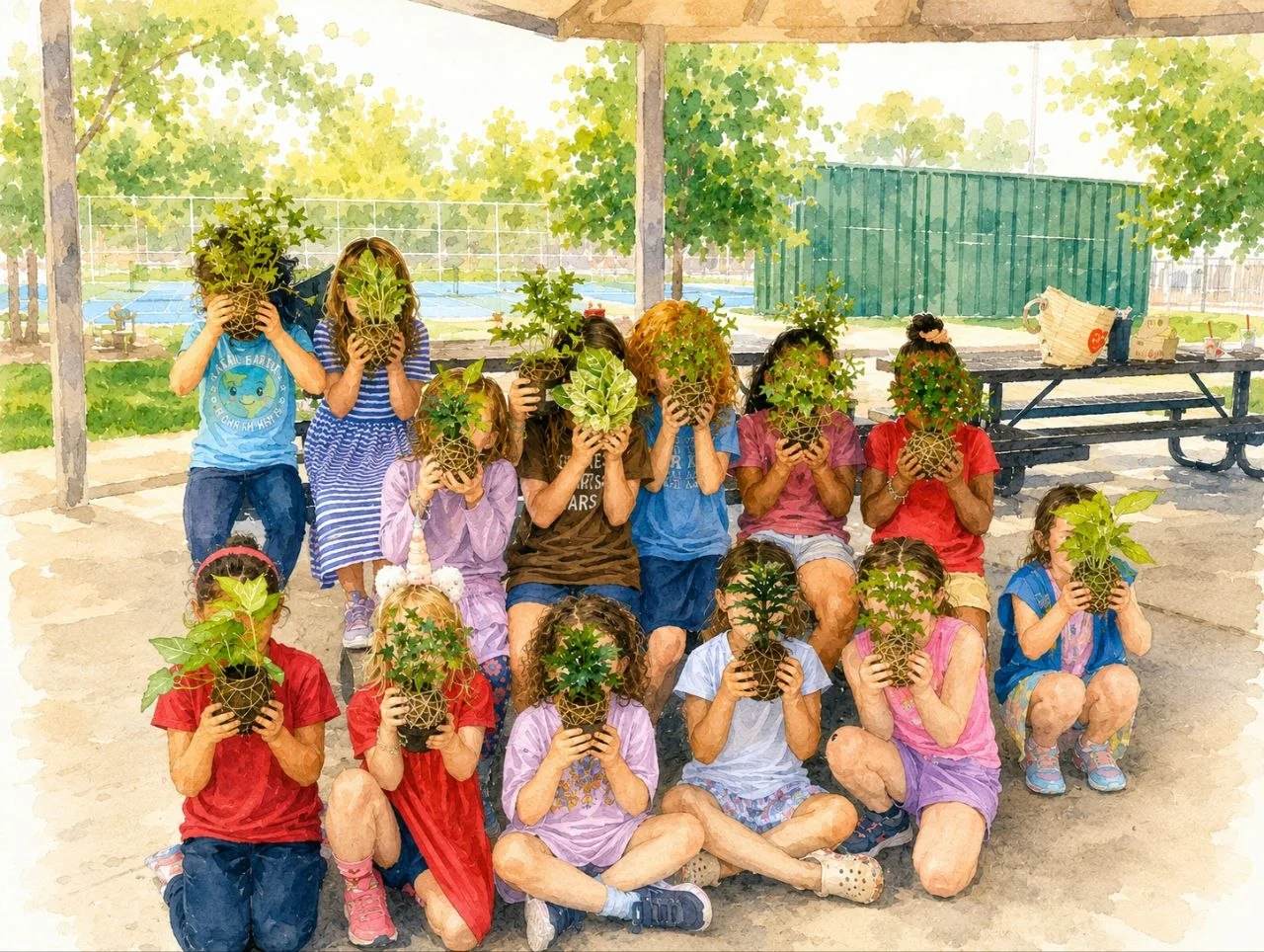
We recently hosted a kokedama workshop for a local Girl Scout troop, and it was exactly the kind of afternoon Meyer Lemon loves: plants on the table, soil everywhere, a little uncertainty at first, and a lot of pride by the end.
We met under a shaded pavilion with plants, soil, moss, twine, and a simple reference guide so the girls could follow each step at their own pace.
Kokedama is a Japanese planting method where the plant's roots are wrapped in soil and moss, then tied into a ball. It is part plant care, part sculpture, and part patience practice. There is no way to make one without using your hands.
That was the interesting part.
At the beginning, several girls were hesitant. The soil was damp. The moss was loose. The roots needed to be handled gently but directly. A few girls were not sure they wanted to dig in, and honestly, that made complete sense. Many children spend a lot of their day being told to stay clean, keep things contained, and avoid making a mess.
Garden work asks for something different.
It asks us to tolerate messy hands long enough to learn what the plant needs. It asks us to notice texture, moisture, roots, leaves, and weight. It asks us to stay with a process even when it feels unfamiliar. That is a real skill, and it does not always come naturally at first.
As the workshop went on, the hesitation started to shift. The girls pressed soil around roots. They wrapped moss. They held the plant steady while looping twine around and around. Some needed help getting started. Some needed help tying the final knots. Each kokedama slowly became something they could recognize as their own.
By the end, the feeling had changed completely. The girls were proud of what they made. They held up their plants for a group photo, each kokedama different from the next. Some were neat and round. Some were a little wild. All of them were alive, handmade, and ready to go home.
A few parents and girls even sounded like they might try making kokedama again. That may be my favorite kind of workshop outcome. Not perfection. Not everyone doing the same thing. Just enough confidence to think, "I could do this again."
That is a big part of what Meyer Lemon is trying to offer families: hands-on experiences that make nature feel close, possible, and worth paying attention to. Sometimes that starts with a native plant. Sometimes with a mushroom block, a seed jar, a compost bin, or a backyard habitat. And sometimes it starts with a group of Girl Scouts learning that muddy fingers are not a problem to avoid. They are part of the work.
The reference guide helped the troop move through the steps, but the real learning happened in the doing. They practiced care, patience, observation, and a little bit of bravery. They left with a living plant they had shaped themselves.
That is a pretty good afternoon.
Take-home kokedama guide
At the end of the workshop, each girl had a simple reference guide to help her remember what she made and how to care for it at home.
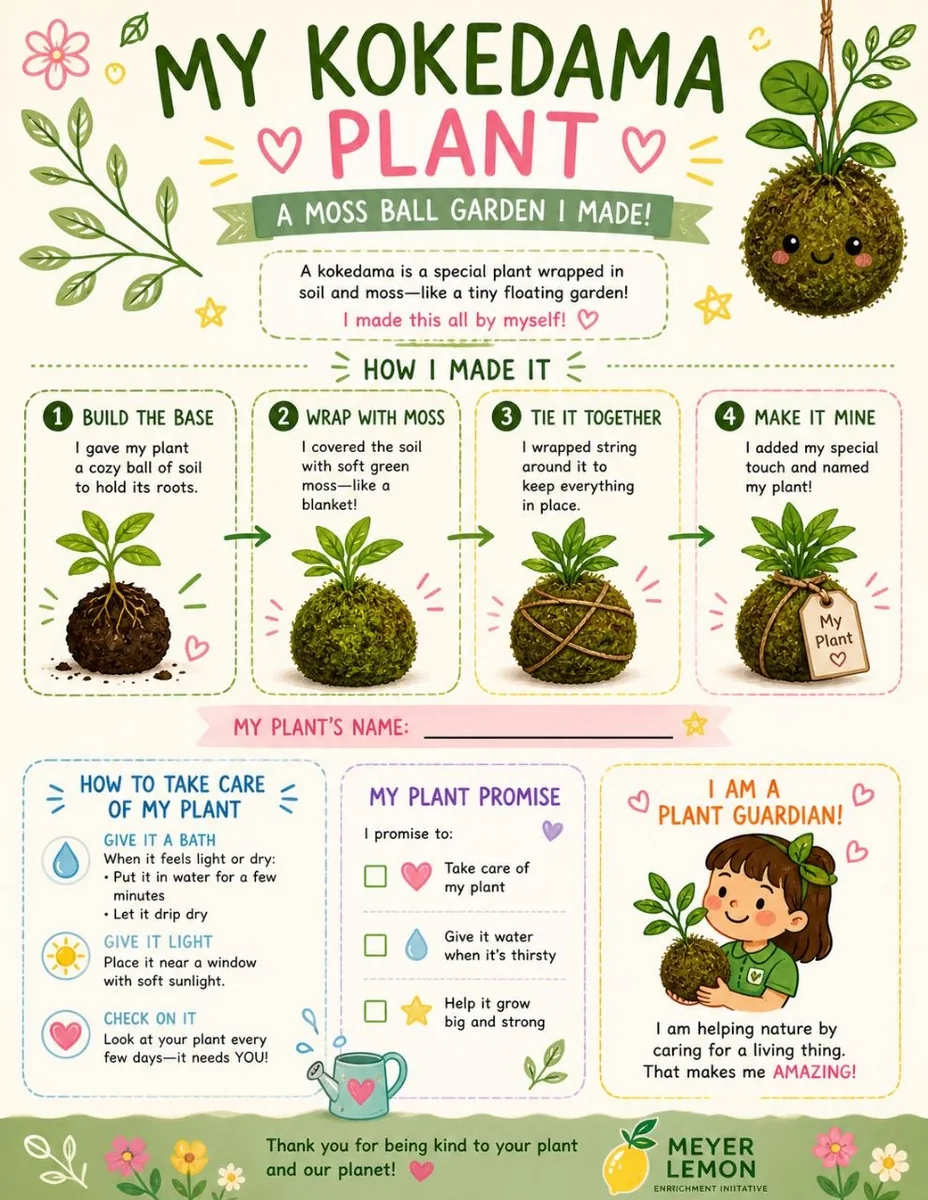
The guide walks through the basic steps: building the soil ball, wrapping it with moss, tying it together, and making it personal. It also gives the girls a place to name their plant and make a small plant-care promise.
I like that part because the worksheet turns the kokedama from a one-time craft into something they are responsible for. Take care of it. Notice when it feels light or dry. Give it water. Find a soft sunny spot. Check on it every few days.
That is the real follow-through. The workshop ends, but the relationship with the plant keeps going.