
Meyer Lemon started as one of those ideas we kept circling back to.
Before we had kids, Javier and I talked about starting something related to science education. We were both drawn to the kind of learning that feels alive: cooking, experimenting, asking questions, making something with your hands, and realizing that science is not separate from everyday life.
One of our earliest shared interests was molecular gastronomy. We loved that food could open the door to curiosity. Sous vide, spherification, texture, color, flavor, surprise. It was never just about recipes. It was about wonder. It was about seeing that science could be creative and beautiful and fun.
That idea stayed with us.
Then we had our boys. We bought a home with a garage and a bigger outdoor space. We spent more time in the garden. We watched Sebastian and Nicolas learn by doing: cooking, pretending, inventing, asking questions, getting messy, and starting before an idea was fully formed.
They reminded us that learning does not have to wait for perfect conditions. Sometimes it starts with one question, one seed, one tool, one recipe, one bug on a leaf, or one afternoon outside.
That is where Meyer Lemon really started to take shape.
The name came from the fruit itself. I introduced Javier to Meyer lemons years ago, and they became a favorite because they are softer, sweeter, more floral, and less sour than a typical lemon. Javier loved the science of them too. A Meyer lemon is a hybrid, something created from different lineages that becomes its own thing.
That felt right for what we were building.
Meyer Lemon brings together science, nature, creativity, food, family, and community. The name felt personal, bright, and a little unexpected, which is exactly the feeling we wanted.
As our kids got older, I started noticing how hard it could be to find meaningful things to do as a family. I wanted more time away from screens. More time outside. More creative activities. More real-world learning. More chances for kids to feel like what they were learning mattered beyond a worksheet or a classroom.
I also wanted parents to feel supported. Not just like they had found something to fill an hour, but like they were being given tools to connect with their kids in a deeper way.
That is the heart of Meyer Lemon.
We want kids to walk in and feel excited to try something new. We want them to feel creative, capable, and important. We want them to know their ideas matter, and that the things they learn connect to the world around them.
We want parents to feel welcome and encouraged. Meyer Lemon is meant to be a place where families can reconnect with each other, with nature, and with a slower, more meaningful kind of learning.
The garden and outdoor space are central to that vision. Children need nature. They need to understand that a healthy ecosystem is not something far away. It begins in the small spaces around us: a backyard, a garden bed, a tree, a patch of native plants, a place where bees, birds, insects, soil, and children all have room to belong.
We want kids to water plants, harvest herbs, notice seasons, observe insects, ask better questions, and begin to understand that life is connected.
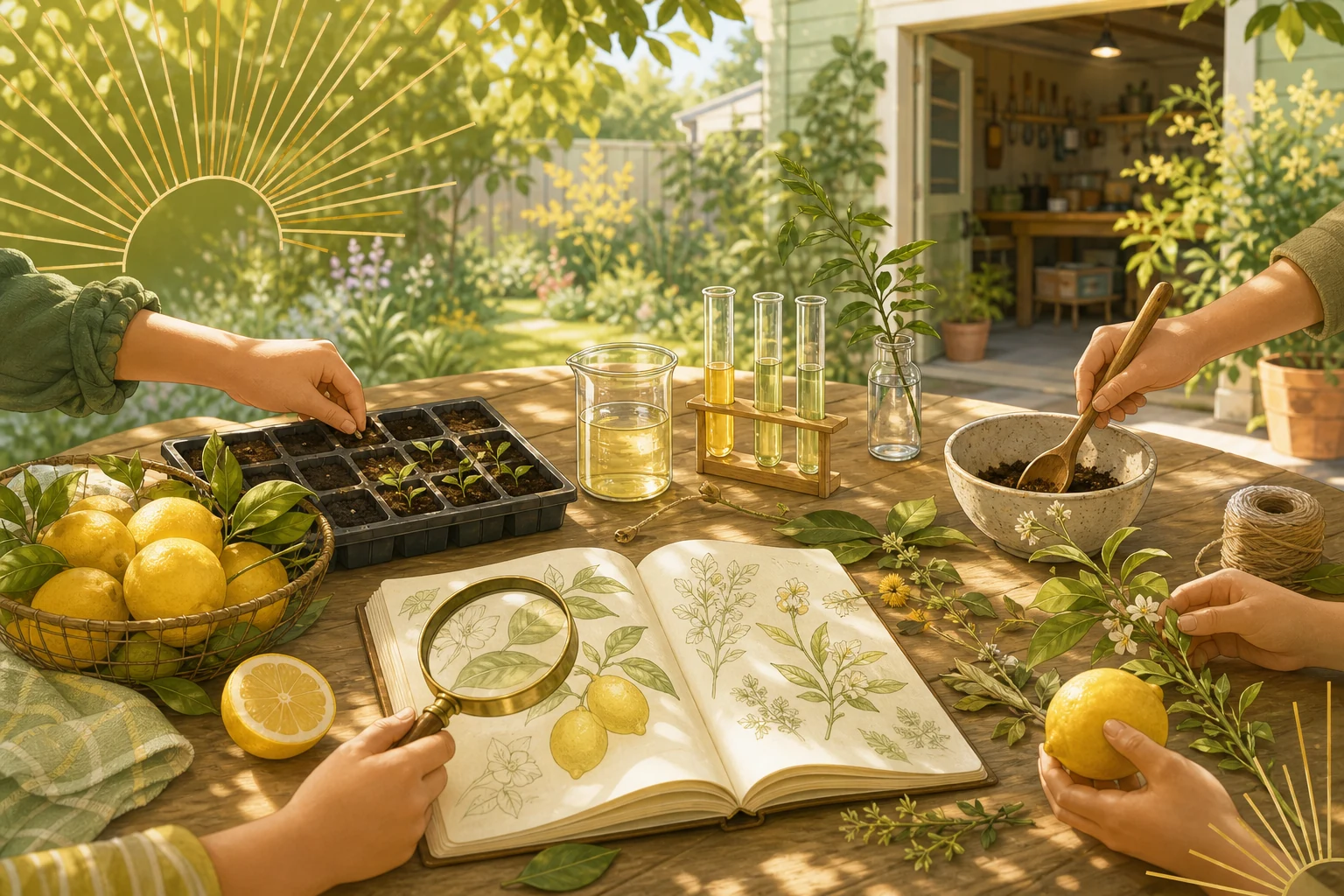
At Meyer Lemon, I imagine families cooking together, planting together, building habitats, exploring light and color, learning about ecology, using technology creatively, making things with their hands, and connecting science to everyday life.
A child might leave with something they made, something they tasted, something they planted, and something they now see differently.
Over time, I hope Meyer Lemon becomes a place to get inspired. A place to ask questions. A place where families can feel more connected to nature, to each other, and to the communities around them.
The heart of Meyer Lemon is connection: to nature, plants and animals, one another, and the freedom to be curious.